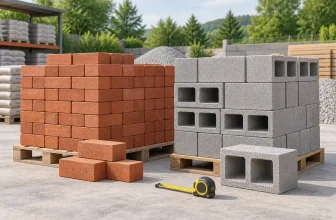
Brick quantities look simple until openings, corners, mortar joints, bond patterns and breakages enter the measurement. A wall that is 10 square metres does not always need the same number of bricks ...
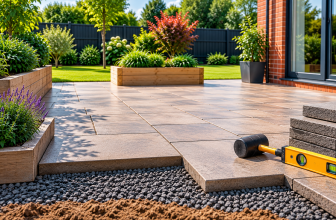
Working out sand and cement for a patio is more than multiplying the patio area by a guessed bag count. The mix depends on whether you are bedding slabs on a mortar bed, pointing joints, or both. ...
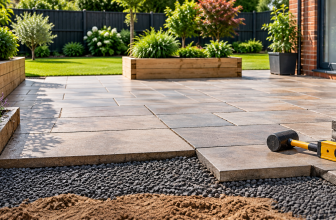
Patio slab quantities are easy to underestimate because the visible area is only part of the order. Slab size, joint gaps, cutting around edges, steps, borders and waste all affect the final count. ...
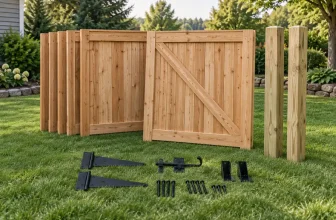
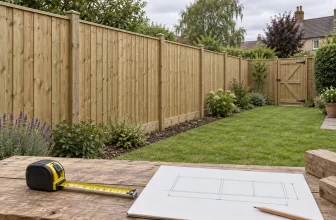
Fence posts are the part of a new fence that people most often undercount. Panels may be the visible part, but the posts set the bays, carry the gates, form the corners and transfer wind loads into ...
Fence panel counts look simple until you allow for posts, gravel boards, gates, corners and the awkward last bay. The useful measurement is the total fence line divided into real panel widths, with ...
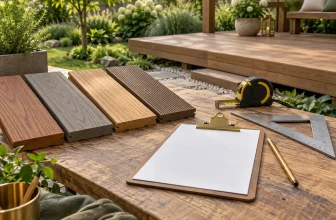
Ordering decking is rarely as simple as dividing the deck area by one board size. Boards are sold by finished width, cover a real gap, come in fixed stock lengths and lose material at cuts around ...
MOT Type 1 is a popular sub-base for patios, paths, driveways and small building bases, but ordering it by eye is an expensive way to start a project. The quantity depends on the footprint, the ...
Patio projects often go wrong before the first slab is laid because the sub-base is guessed rather than measured. Hardcore, crushed concrete, MOT Type 1 and other compactable aggregates are sold by ...
Driveway gravel is usually sold by the tonne, cubic yard, cubic metre or bulk bag, while the project starts with a length, width and depth. That gap between measurements and supplier units is where ...
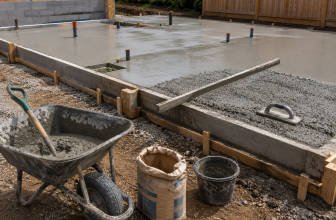
Buying concrete by the bag feels straightforward until the first calculation comes back in cubic feet, cubic yards or cubic metres. The reliable way to plan is to calculate the volume first, then ...