

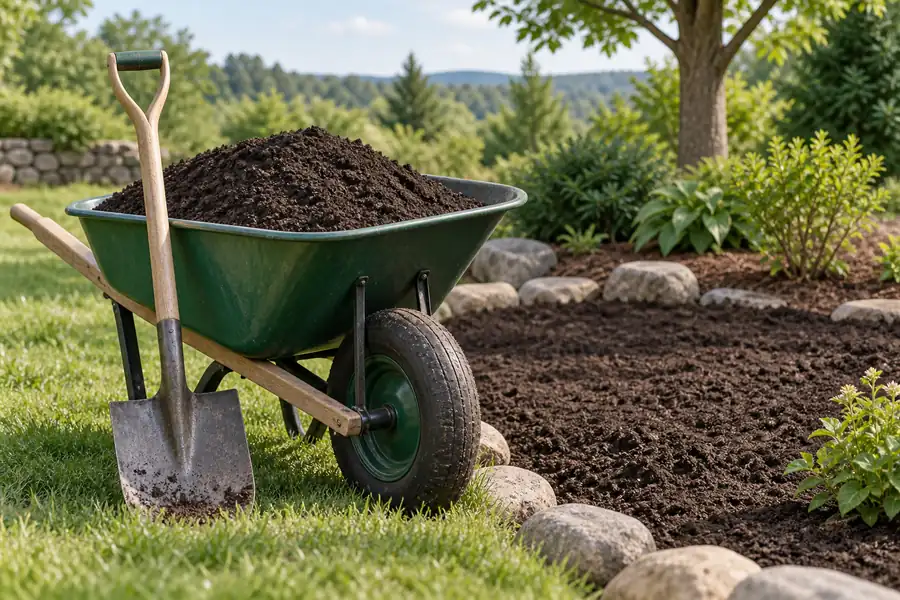
Multiply the area by the depth of new soil being added, with both measurements in compatible units. For square feet and inches, cubic yards = area × depth ÷ 324. The important word is “new”: you don’t need to buy the soil that is already there.
The topsoil calculator turns that measured volume into bags or a bulk order using your supplier’s sizes. It can also estimate weight when suitable density data is available. Start with volume; add weight only when the purchase or delivery arrangement needs it.
Measure the layer you actually intend to add
Mark the proposed finished level and compare it with the prepared ground. The difference is the added depth. Don’t enter the final total soil depth if some of that depth is already present beneath the surface.
Divide an irregular area into rectangles and triangles, or enter a measured area directly. Deduct permanent paving and other areas that won’t receive soil. Make the subdivisions non-overlapping: a generous overlap between two sketches is still a real over-order when the calculator adds them.
If the depth changes, split the site into zones with representative depths. One average can be useful for a genuinely uniform change, but a single deep depression is better recorded separately. Keep the calculation tied to the intended levels rather than ordering enough soil to raise everything to the deepest reading.
A 240-square-foot example
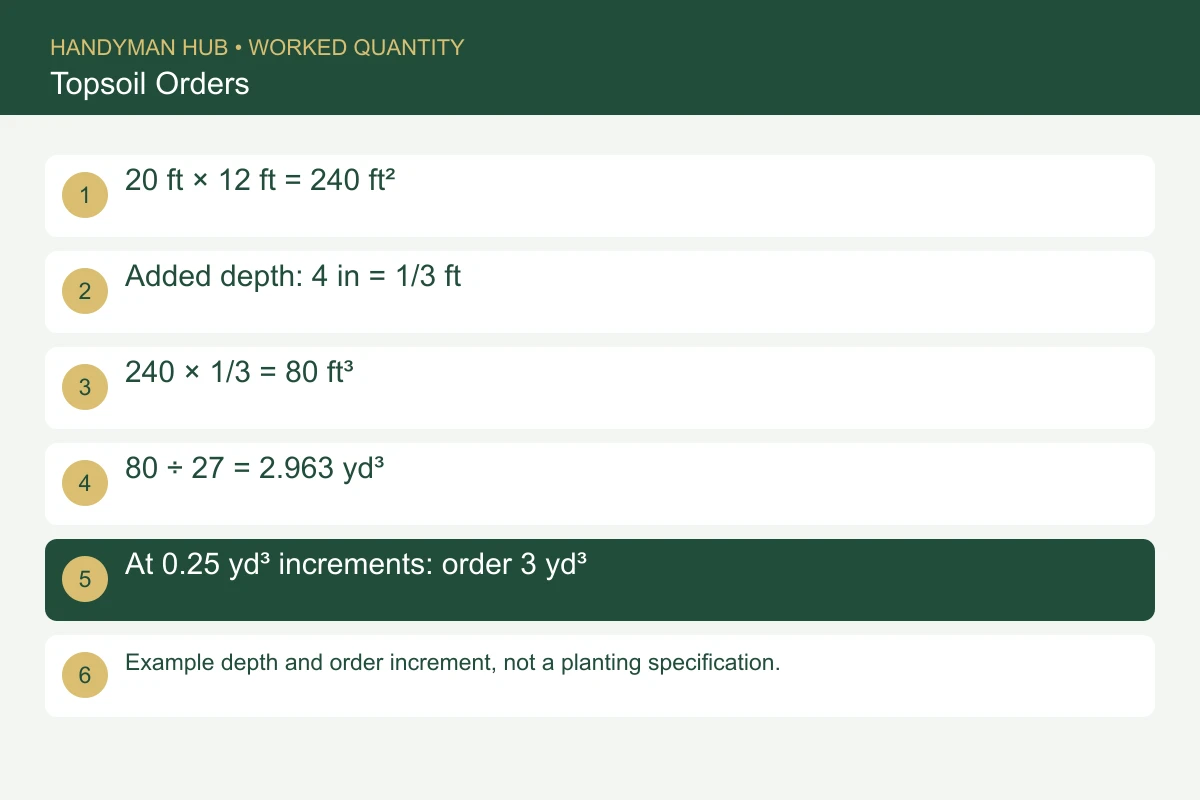
Suppose a prepared area is 20 feet long and 12 feet wide, and the specified new layer is 4 inches. The area is 240 square feet. Four inches is one-third of a foot, giving 240 × 1/3 = 80 cubic feet. Divide by 27 to obtain 2.963 cubic yards.
In the live calculator, choose Imperial, enter 20 and 12 feet, and enter 4 inches as the depth. Select loose bulk soil by volume. With no extra allowance and a hypothetical 0.25-cubic-yard ordering increment, the order rounds up to 3 cubic yards. The increment comes from your supplier; it isn’t a standard delivery rule.
Now consider a different site with the same area: 120 square feet needs 2 inches, and the other 120 needs 6 inches. The first zone uses 20 cubic feet, the second 60, again totaling 80. That equality works because the two areas are equal. If most of the site needed 6 inches, an unweighted average of the two depths would understate the order.
A useful sense check is to calculate the effect of one extra inch. Over 240 square feet, it adds 20 cubic feet, or about 0.741 cubic yards. Rechecking depth can make a bigger difference than debating a small percentage allowance.
Compare bags with the actual bulk order
For the 80-cubic-foot baseline, a bag labeled 2 cubic feet gives 40 bags before reserve. That comparison only works for a volume-labeled bag. A 40-pound bag doesn’t tell you its volume without matching density information.
The tool’s Imperial volume-bag field uses US gallons, so don’t put “2” into that field for a 2-cubic-foot bag. Two cubic feet is about 14.96 US gallons. Follow the displayed label or use the appropriate metric volume conversion. Keeping the supplier’s original label beside the estimate makes this mistake easier to catch.
Compare the total delivered cost of the rounded purchases. Forty bags priced individually and 3 cubic yards priced in bulk may have different delivery, unloading and handling arrangements. No single method is automatically cheaper once access and minimum orders are included.
Allowances should have a reason
Some projects need an explicit loose-volume allowance to meet the intended installed condition. Ask the supplier how the chosen soil is measured and how it is expected to settle under the specified placement method. There is no universal percentage that applies to screened topsoil, compost-rich blends and every filling situation.
Keep three figures in the record: calculated layer volume, volume after the chosen allowance, and the rounded purchase. For example, 2.963 cubic yards with a hypothetical 10% allowance becomes 3.259 cubic yards; at 0.25-yard increments that becomes a 3.5-yard order. The difference between 3.259 and 3.5 is purchase rounding, not another settling factor.
Soil quality and soil quantity answer different questions
A dark color or a “screened” label alone doesn’t establish that a soil suits your planting. Ask what the product contains, whether test information is available, and whether it is appropriate for the intended use. Utah State University Extension’s topsoil guide identifies texture, salts, pH, organic matter and coarse fragments as relevant quality characteristics.
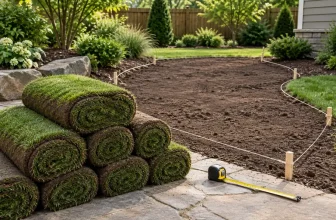
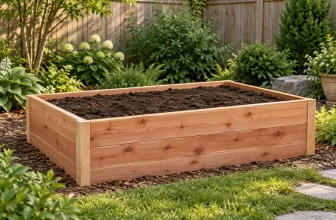
For a raised bed, use the inside-dimensions calculation rather than the external timber footprint. For a new lawn, settle preparation and soil requirements before ordering the sod. The Super-Sod preparation and delivery guide likewise puts site preparation before the sod delivery. Its product recommendations belong to that supplier’s system and region.
Check the delivery basis
When purchasing by weight, use the supplier’s bulk density for the material in the condition being delivered. Wet and dry soil can have different weights for the same volume. The calculator keeps its density field in kilograms per cubic meter even in Imperial mode; the resulting US tons are short tons of 2,000 pounds.
Ask the hauler to confirm access and unloading rather than relying on a calculated load count. A weight limit, a volume limit and the vehicle’s ability to reach the drop point are separate constraints. Keep any material left over from a previous job out of the deduction unless it is usable and suitable.
Finish by saving the topsoil order estimate with your area sketch, depth readings, product name and supplier rounding rule. Those four details make the number explainable if the site or quotation changes.
Featured image: original concept illustration, not a completed Handyman Hub customer project.


[…] Topsoil Orders […]