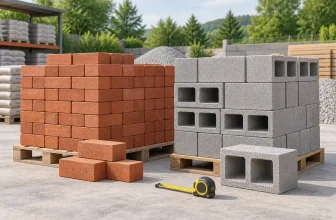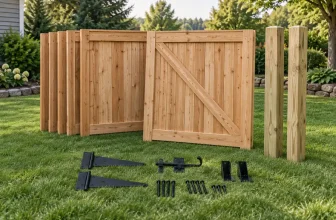

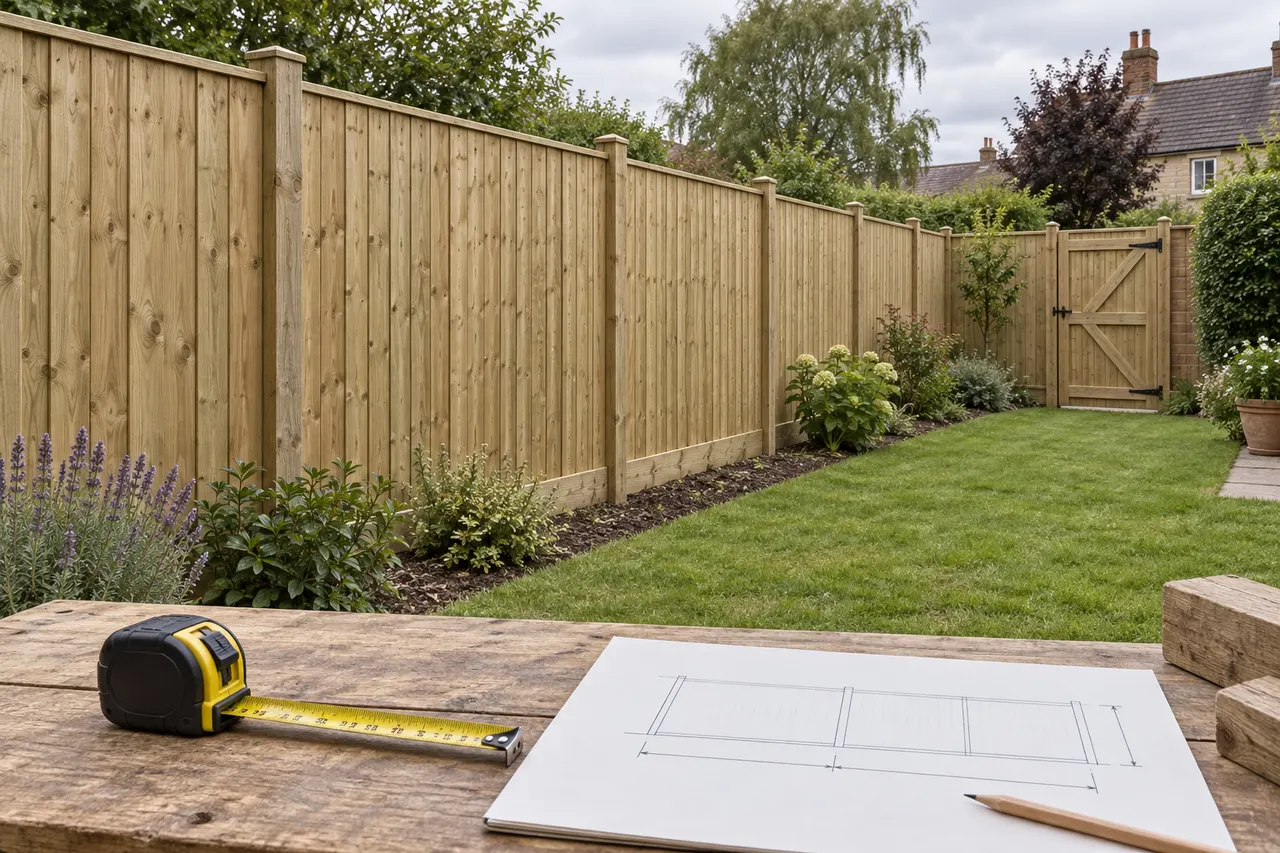
Concrete post holes look simple on paper, but the order can change quickly when you change the number of posts, hole diameter or depth. This guide shows how to estimate concrete for fence posts, how to use the Handyman Hub concrete calculator, and how to turn the result into a sensible supplier or bagged-materials order.
The three measurements that control the order
You need three inputs: the number of posts, the hole diameter and the planned hole depth. Measure the hole, not the timber post. If a post sits in a 12-inch-diameter hole that is 24 inches deep, the concrete occupies the cylinder around it, less any volume displaced by the post if you choose to account for that separately.
For a cylindrical hole, use:
π × radius × radius × depth = volume
Use the same unit throughout. Radius is half the diameter. If you measure inches, convert the finished volume to cubic feet before comparing it with bag yields.
Worked example: ten fence posts
Suppose a straight run needs 10 posts. Each hole is 12 inches across and 24 inches deep.
Diameter = 12 in, so radius = 6 in. Convert the depth to feet: 24 in ÷ 12 = 2 ft. Convert the radius to feet: 6 in ÷ 12 = 0.5 ft.
One hole is approximately 3.14 × 0.5 × 0.5 × 2 = 1.57 cubic feet. Ten holes therefore need about 15.7 cubic feet before an allowance. That is roughly 0.58 cubic yards. Your actual order should follow the confirmed hole dimensions, product yield and supplier minimums.
Use the concrete calculator step by step
- Open the concrete calculator.
- Choose the unit system you will use for ordering.
- Enter the hole dimensions. If the tool uses rectangular inputs, calculate one cylindrical hole separately and repeat the volume for the post count.
- Multiply the single-hole result by the number of posts.
- Add a clearly labelled allowance for irregular excavation, spillage and handling.
- Convert the final volume into the units your supplier or bag label uses.
- Save the dimensions, date and product yield so you can check quotes later.
For a full boundary project, pair this estimate with the fence materials estimator. It helps you check panels, posts, gravel boards and gates alongside the concrete.
Why hole size is not a guess
A wider or deeper hole uses disproportionately more concrete because the diameter is squared in the cylinder formula. Doubling the diameter does not merely double the volume. Ground conditions, post height, wind exposure, gate loads and local practice can all affect the footing you need.
Do not reduce a specified footing just to make the material order cheaper. For a gate post, corner post or unusually tall fence, ask a competent local professional to confirm the design. In cold climates, check the required frost depth. In the UK, local planning and boundary rules may also matter, especially for taller fencing and retaining situations.
Post spacing changes the number of holes
Count corners, ends, gate posts and changes of direction before ordering. A long straight run may use regular spacing, but a gate opening usually adds at least two stronger posts. If you replace a single panel with a wider custom panel, recalculate the spacing rather than assuming the old count still works.
Mark the run on the ground and measure between the actual post centres. The fence calculator is useful for testing panel lengths and waste, while the concrete calculation should follow the final post schedule.
Bagged concrete or ready-mix?
Bagged concrete is convenient for a handful of posts, but a long fence can mean dozens of heavy bags and many separate mixes. Check the yield printed on the bag; a 20 kg or 60 lb bag does not have a universal output. Divide the required volume by that yield, then round up to whole bags and keep a modest spare allowance.
Ready-mix can be more efficient for many holes, but confirm the supplier minimum, access, discharge method and any short-load charge. Tell the supplier the calculated volume, number of holes, approximate dimensions and site access. Ask whether the recommended mix is suitable for post footings and whether they expect you to order an allowance.
Preparing each hole
- Set out the fence line and check property boundaries before digging.
- Call the relevant utility-locating service where required.
- Keep hole diameters consistent with the design.
- Remove loose soil and standing water before placing concrete.
- Brace posts so they stay plumb while the concrete is placed.
- Do not use extra water to make a stiff mix easier to pour.
- Keep the top of the footing shaped to shed water away from the timber.
- Follow the product cure time before loading the fence.
For broader concrete and construction guidance, the American Concrete Institute is a useful technical reference. UK readers should also check their council guidance and the building-regulations approval guidance where a project may fall within local controls.
Common estimating mistakes
Using the post diameter as the hole diameter
The hole is normally wider than the post. Measure the planned excavation or auger size.
Forgetting gate and corner posts
These posts often need a different footing and are easy to miss when counting standard panels.
Mixing inches, feet and metres
Convert before multiplying. Unit errors can turn a manageable order into a serious shortage.
Using a generic bag yield
Use the manufacturer’s stated yield for the exact product, then round to whole bags.
Adding an unexplained waste percentage
Keep the core volume and allowance separate. That makes supplier quotes easier to compare.
Frequently asked questions
How much concrete does one fence post need?
There is no single answer. Calculate the cylinder from the hole diameter and depth, then subtract or allow for post displacement according to the method you are using.
How deep should a fence-post hole be?
It depends on fence height, soil, wind, post material, gate loads, local frost conditions and the chosen construction method. Use the calculator after the footing dimensions have been confirmed.
Should every post have the same size footing?
Not necessarily. Gate, corner, end and heavily loaded posts may need a different design from intermediate posts.
Can I use postcrete instead of ordinary concrete?
Follow the exact product instructions. Post-fixing products have their own water, placement and cure requirements, so use their stated coverage rather than assuming a standard concrete yield.
How much extra should I order?
Use a modest, clearly stated allowance for irregular holes and spillage. If the site is very uneven, remeasure the holes rather than hiding uncertainty in a large percentage.
Does the calculator approve my fence design?
No. It estimates material volume from your inputs. It does not verify boundaries, utilities, structural adequacy, permits or local planning rules.
Final checklist
- Confirm the fence length, corners, ends and gates.
- Record the hole size for each post type.
- Calculate one hole, then multiply by the count.
- Separate the allowance from the core volume.
- Check bag yield or ready-mix minimums.
- Save the calculation with the fence materials list.
When the post schedule is settled, use the fence materials estimator to coordinate panels and fittings, then return to the concrete calculator for the final footing volume.