How Many Fence Posts Do I Need? A Practical Fencing Calculator Guide

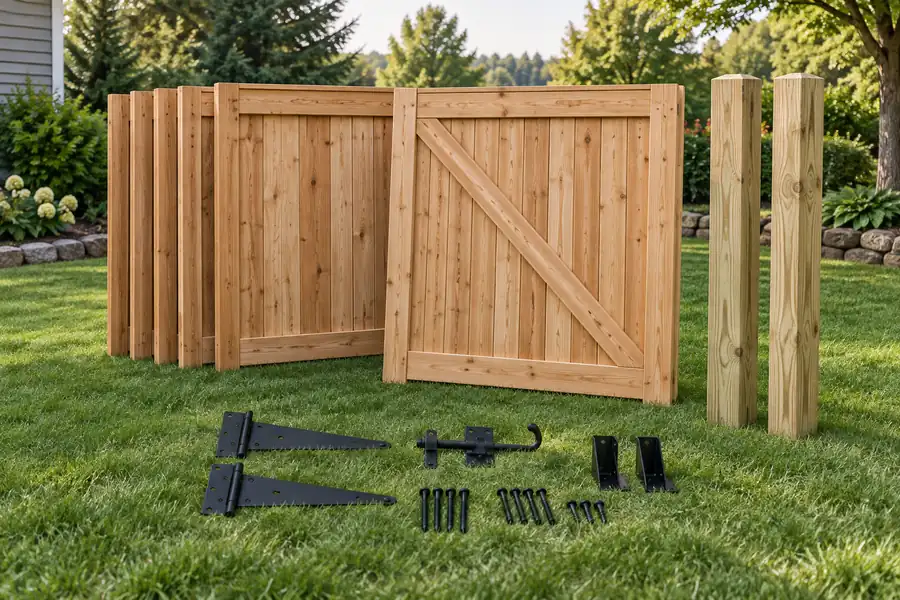
Fence posts are the part of a new fence that people most often undercount. Panels may be the visible part, but the posts set the bays, carry the gates, form the corners and transfer wind loads into the ground. This guide shows how to count them from a real boundary sketch and use the Handyman Hub fence calculator to prepare a practical order.
Why post count is different from panel count
Six panels usually sit between seven posts in a straight run. That simple rule changes when a run starts against a wall, turns a corner, includes a gate or uses a system with shared corner posts. A panel’s nominal width also does not always equal the finished bay width: slots, rails, clips and clearances can change the spacing.
Timber gravel-board systems, slotted concrete posts, metal posts and composite systems each have their own details. Use the manufacturer’s bay measurement and post instructions rather than a remembered six-foot rule.
Sketch the boundary in separate runs
Walk the fence line and write each straight run on a sketch. Mark the start, end, corners, gates, returns to walls, changes in level and any existing posts that will stay. Do not divide the entire perimeter by one panel width; an irregular boundary rarely installs as one continuous line.
Measure the distance between the actual finished points. If a wall connection or gate post takes up part of the run, record that detail before calculating bays.
Worked example: a straight 12 m run
Assume a supplier’s effective bay width is 1.83 m. A 12 m run needs 12 ÷ 1.83 = 6.56, so round up to 7 bays. Seven bays require eight posts when the run has a post at both ends.
If one end finishes against a suitable wall connection, the supplier may allow a different terminal detail. If a gate interrupts the run, count the hinge and latch posts separately and recalculate the remaining fence sections.
Count gates, corners and ends separately
Gate posts
A gate normally needs two posts, one for the hinges and one for the latch. Wide or heavy gates may require larger, deeper or doubled posts. A pair of driveway gates can need four structural posts even when the opening is counted as one feature.
Corner posts
A corner can use a two-way slotted post, two posts close together or a purpose-made corner connection. The correct choice depends on the fence system and the angle. Add the corner detail to each affected run instead of assuming a standard end post.
Wall ends and returns
A fence that meets a wall, shed or retaining edge may use a terminal post, an arris rail detail or a bracket. Confirm the product’s approved connection before removing a post from your list.
Use the fence calculator step by step
- Open the fence calculator.
- Select the units used on your boundary sketch.
- Enter each straight run separately.
- Enter the supplier’s effective bay width.
- Record gates, corners and wall ends as separate details.
- Review panels, posts and gravel boards together.
- Save the result with the panel height, post material and supplier assumptions.
If you are casting posts into concrete, use the concrete calculator as a separate check. The post count and foundation volume are related, but they are not the same calculation.
Slopes, steps and changes of level
A fence that follows a slope may use raked panels, while a stepped fence uses level bays with a change between posts. Both can create short infill pieces and different post heights. Measure each bay and note where gravel boards or concrete need to be stepped.
Do not assume the shortest visible panel will use a standard post. The post may need to remain full height to support the next bay or a cap rail.
Post foundations and wind exposure
Post quantity alone does not make a fence structurally suitable. Foundation depth, concrete size, soil, drainage and wind exposure all matter. A tall solid panel in an exposed position can put much more load on a post than an open trellis panel.
Follow the post and panel manufacturer’s instructions and check local boundary, planning or landlord requirements. Treat the calculator as a quantity-planning aid, not a structural design certificate.
Common post-count mistakes
Counting one post per panel
Posts sit at bay boundaries, so a straight line normally has one more post than panels.
Forgetting the gate posts
Gate hardware needs dedicated support posts and clearances.
Ignoring corners
A corner changes direction and usually needs a special post arrangement.
Using the nominal panel width
Use the supplier’s effective bay width and installation clearances.
Removing posts for wall connections without checking
Confirm the approved terminal detail before reducing the order.
Fence post order checklist
- Sketch every straight run and opening.
- Confirm effective bay width from the supplier.
- Count start, end and bay-boundary posts.
- Add gate, corner and terminal details.
- Check slope, steps and changes of level.
- Confirm post length, foundation method and wind guidance.
- Keep a separate line for concrete, gravel boards, caps and fixings.
The Jacksons Fencing information library is useful for comparing fencing systems and post components. Confirm the final quantities against the installation instructions for the system you buy.
Frequently asked questions
How many posts do I need for six fence panels?
A straight run commonly needs seven posts, but a wall end, corner or gate can change the count.
Do I need two posts for a gate?
Most gates need separate hinge and latch posts. Heavy or wide gates may require larger or doubled posts.
How many posts are needed for a corner?
It depends on the post system and corner angle. Use the supplier’s corner detail rather than assuming a standard post.
Can a fence finish against a wall without a post?
Sometimes, but only when the approved terminal fixing allows it. Check the system instructions before removing the post.
Should posts be set in concrete?
Use the foundation method specified for the post and ground conditions. Soil, exposure and post material all affect the detail.
Does the fence calculator design the foundations?
No. It helps plan quantities. Foundation size and structural suitability need to follow the manufacturer or a competent professional.
Final post-count check
Before ordering, compare the saved calculator result with your sketch, panels, effective bay width, gates, corners, wall ends, post lengths and foundation plan. That final review is what turns a simple panel estimate into a realistic fencing materials list.