How Much Hardcore Do I Need for a Patio? A Practical Aggregate Calculator Guide

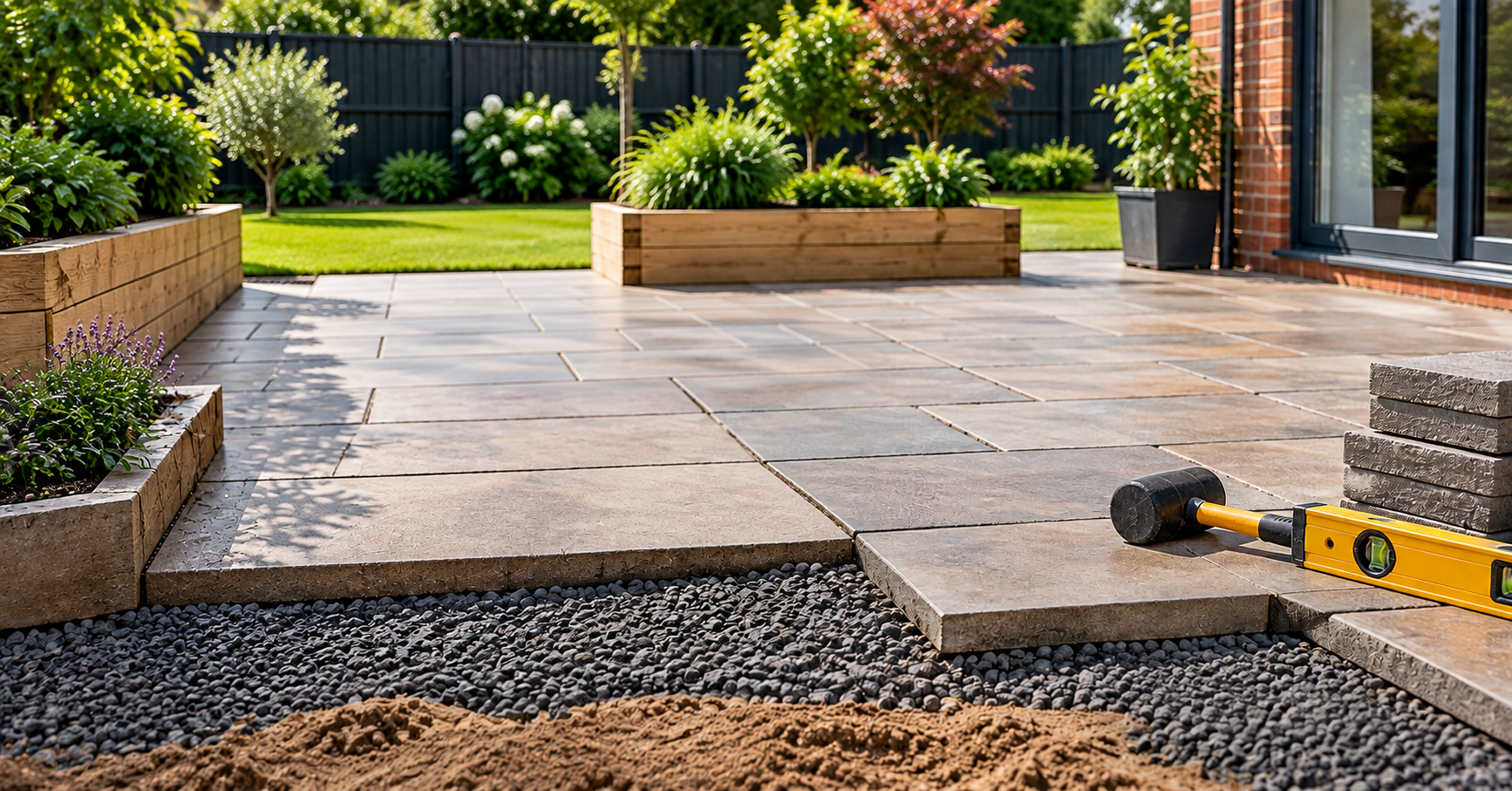
Patio projects often go wrong before the first slab is laid because the sub-base is guessed rather than measured. Hardcore, crushed concrete, MOT Type 1 and other compactable aggregates are sold by different suppliers in tonnes, cubic metres, bulk bags or loose loads. This guide shows how to measure the area, choose a realistic depth and use the Handyman Hub gravel and aggregate calculator to turn your patio plan into an order you can check.
What hardcore does in a patio build-up
Hardcore is the load-bearing layer below bedding material and paving. It spreads weight, helps create a stable formation and replaces weak or disturbed soil. The right material and depth depend on soil, drainage, traffic and the paving system. A calculator gives a quantity; it does not replace a suitable construction detail or local specification.
For a typical patio, keep these layers separate in your notes:
- Compacted sub-base: hardcore, MOT Type 1 or another approved aggregate.
- Bedding layer: mortar or a suitable laying course, calculated separately.
- Paving: slabs, blocks or porcelain with their own waste allowance.
Measure the patio area accurately
For a rectangle, multiply length by width. An L-shaped patio should be split into two rectangles. For a curve, use smaller straight sections or calculate the geometric area and add a cutting allowance. Measure the actual finished footprint rather than the widest point, and record steps, paths and widened seating areas separately.
If the sides are not parallel, take several width measurements and use an honest average. Mark the outline with paint or pegs before you measure; a quick sketch makes it much easier to explain the order to a supplier.
Choose the compacted depth before calculating
Depth is a design decision rather than a default number. Light pedestrian use on firm ground may need a different build-up from a patio carrying heavy furniture, a hot tub or a vehicle. Check the paving manufacturer’s installation guidance and local practice before entering a depth.
Enter the intended compacted depth in the calculator. If the finished sub-base needs to be 150 mm, use 0.15 m in a metric calculation. Do not treat the height of a loose tipped pile as the finished depth.
Worked example: a 5 m by 4 m patio
A 5 m by 4 m rectangle has an area of 20 m². With a 150 mm compacted sub-base, convert 150 mm to 0.15 m. The compacted volume is 20 × 0.15 = 3.0 m³. If your supplier allows 15% for compaction and uneven excavation, the order allowance becomes 3.45 m³ before converting to tonnes or bulk bags.
That conversion must come from the supplier for the exact product. Crushed concrete, limestone, granite and MOT Type 1 have different densities and moisture content. Keep 3.0 m³ as the calculated volume, show the allowance separately and ask the supplier how many tonnes or bags correspond to that figure.
Use the aggregate calculator step by step
- Open the gravel and aggregate calculator.
- Choose metres, feet or the unit system used by your supplier.
- Enter the patio length and width, or calculate each section separately.
- Enter the compacted hardcore depth for the sub-base only.
- Review the volume and apply a clearly labelled compaction allowance.
- Ask the supplier for the product-specific conversion to tonnes or bulk bags.
- Save the result with the material name, depth and delivery assumptions.
Use the concrete calculator separately if the project also includes a concrete footing, step base or retaining edge. Mixing concrete and hardcore into one figure makes a supplier quote harder to check.
Allow for excavation, compaction and waste
Excavation depth is not always the same as sub-base depth. You may need to remove topsoil, roots or soft spots before placing the aggregate. Conversely, a firm existing formation may reduce excavation in some areas, subject to the design.
Compaction allowance should be visible rather than hidden in a rounded total. Ask whether the supplier’s coverage is loose or compacted, and whether a bulk bag is filled by weight or volume. If access is tight, include a small allowance for handling and re-spreading, but do not use waste to compensate for a wrong measurement.
Edges, slopes and drainage
Patios need controlled falls so water leaves the paving and does not run toward the building. Mark finished levels before calculating excavation and check thresholds, steps and drainage channels. Edge restraints can create narrow strips that deserve their own measurements.
On a slope, measure the plan area horizontally and split the build-up into bands if depth changes. A patio beside a lawn may need a retaining edge; a patio beside a wall may need a drainage detail. The sub-base quantity cannot solve a drainage problem by itself.
Common hardcore ordering mistakes
Using the patio area for the whole garden
Only measure the actual paved footprint and add paths or steps as separate sections.
Choosing a depth because it is easy to remember
Confirm the build-up for the soil, paving and expected loads before calculating.
Ordering one material for every layer
Hardcore, bedding material and jointing products perform different jobs and should be priced separately.
Ignoring delivery access
Check whether a tipper, grab lorry or bulk bag can reach the unloading point and whether the ground can take the delivery vehicle.
Rounding before the final conversion
Keep the area, depth and volume precise until the supplier’s conversion has been applied.
Patio sub-base preparation checklist
- Mark the finished patio outline and levels.
- Measure rectangles, curves, paths and steps separately.
- Confirm the compacted depth and the required aggregate specification.
- Check soil, roots, soft spots and drainage routes.
- Calculate hardcore volume before adding the compaction allowance.
- Confirm the supplier’s tonnes-per-cubic-metre or bag conversion.
- Plan delivery, storage, compaction and safe access.
The Pavingexpert reference library is useful when comparing sub-base and paving construction details. Use the product manufacturer’s instructions and supplier’s specification for the material you actually order.
Frequently asked questions
How much hardcore do I need for a 3 m by 3 m patio?
Start with 9 m², multiply by the compacted sub-base depth and then apply the supplier’s recommended allowance. Keep the final volume separate from the conversion to tonnes or bags.
Is hardcore the same as MOT Type 1?
They are often used loosely as general terms, but products can differ in grading, recycled content and specification. Confirm the exact material with the supplier and installation guidance.
How deep should a patio sub-base be?
There is no universal depth. Soil, drainage, paving type, loading and local practice all matter. Confirm the build-up first, then use the calculator.
Should I include compaction in the calculation?
Yes. State the compacted volume and show the extra allowance separately so a supplier can see how the order was formed.
Can I use the calculator for a patio path?
Yes. Measure each path section, widened landing and step base separately, then add the volumes for the same aggregate.
Will extra hardcore fix a wet patio?
No. Water management, falls, drainage and the formation need to be resolved before ordering more aggregate.
Final order check
Before you place the order, compare the saved calculator result with the patio drawing, compacted depth, aggregate specification, supplier conversion and delivery plan. That short review catches more expensive mistakes than simply adding another bulk bag.