

Two prices arrive for the same repair. One is several hundred pounds cheaper, but the dearer one mentions preparation, disposal and making good. The cheaper one just says “supply and fit”. You do not yet have a price comparison. You have two different descriptions of a job.
The most useful question is not “Which contractor is cheapest?” It is “What will I receive for the amount I am agreeing to pay?” This guide helps UK homeowners put quotes on the same basis, recognise unresolved costs and prepare a short brief that a tradesperson can actually price.
Write the brief before collecting prices
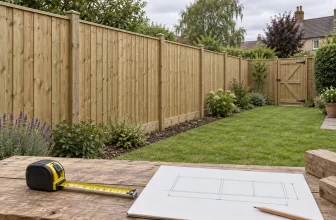
Describe the result you want, the existing problem and any constraints. For example: “Replace the damaged rear fence along the marked run, retain the existing gate if sound, remove the old panels and leave the path usable.” Include measured lengths as preliminary information, then ask the contractor to confirm them on site. A sketch is helpful even if it is not particularly neat.
Identify the choices that change the price. A bathroom quote cannot be meaningfully compared if one installer assumes basic taps while another includes the models you selected. Give product names or a realistic supply allowance, state who buys them, and ask what happens if they arrive damaged or late. Include parking, stairs, restricted access, working hours and whether the property will remain occupied.
- Location and extent: which room, wall, fence run or roof area?
- Existing condition: visible damage, previous repairs and anything not yet investigated.
- Finish: product, colour, dimensions or an agreed allowance.
- Included tasks: protection, removal, preparation, installation, testing and making good.
- Practical arrangements: access, storage, facilities and waste removal.
- Handover: documents, certificates where applicable, instructions and outstanding snagging.
Separate a quote from an estimate
Ask which you have received and what assumptions it contains. Citizens Advice Bury & Bolton’s home improvement guidance distinguishes a written quote from an estimate and recommends a written agreement covering the work and payments. A quote should not be treated as a blank cheque for changes: ask for the reason, scope and price of any proposed variation before agreeing to it.
Some uncertainty is legitimate. A contractor may not know the condition of a concealed floor until the old covering is removed. The helpful response is to identify that uncertainty and agree how it will be handled. “Subfloor repairs excluded; inspect after removal and obtain written approval before proceeding” tells you much more than a small-print statement that all extras will be charged.
Compare these lines before the total
| Line to check | What a useful answer looks like | Why it matters |
|---|---|---|
| Preparation | Specific removal, repair and levelling tasks. | The visible finish depends on the substrate. |
| Materials | Named products or a stated supply allowance. | Similar-looking products can have different specifications. |
| Waste and access | Who removes waste and provides access equipment. | These can sit outside an apparently complete price. |
| Making good | Exactly which surfaces are repaired and decorated. | Installing a new item may leave surrounding work unfinished. |
| Tax | Clear VAT treatment and total payable. | A price excluding applicable VAT is not the final cost. |
| Unknowns | Identified assumptions and written variation process. | Unpriced risk is different from an included item. |
| Programme | Likely start, duration, dependencies and exclusions. | Delivery, drying and inspections affect the sequence. |
| Payment | Defined stages linked to agreed progress. | You need to know what each payment covers. |
Worked example: the lower headline is not always the lower complete price
These figures are invented to show the comparison method, not typical UK trade rates. Imagine two quotes for the same repair. Quote A is £1,200 including applicable tax, but excludes waste removal and making good. After clarification, those items add £150 and £240. Quote B is £1,500 including the same items and applicable tax.
| Comparable item | Quote A | Quote B |
|---|---|---|
| Initial stated price | £1,200 | £1,500 |
| Waste removal | £150 extra | Included |
| Making good | £240 extra | Included |
| Comparable total | £1,590 | £1,500 |
On that clarified scope, B is £90 less. That does not automatically make it the right appointment: still consider the specification, competence, insurance and proposed arrangements. The exercise simply removes a misleading £300 headline difference. If A cannot yet price the extra work, write “unknown” in that cell rather than entering zero.
For a second illustration, suppose a contractor states £2,000 excluding VAT and confirms that 20% VAT applies to this particular job. The payable amount is £2,400. A genuinely comparable £2,300 VAT-inclusive quote is £100 lower, not £300 higher. Do not apply 20% blindly to every building job: ask the contractor to state the applicable treatment and whether the figure already includes it.
Use the calculators as a sense-check, not a verdict
Our job price calculator helps show how materials, labour, other costs and markup combine. For a homeowner, its value is understanding the components. It does not tell you what a particular contractor should charge, and an assumed hourly rate is not evidence that a quote is excessive.
- Choose the tool that matches the job from the calculator directory. For example, fence panels and tile packs need different inputs.
- Check units and use measured dimensions. Enter actual supplier pack coverage or stock sizes where requested.
- Keep quantities separate from rates. A reasonable quantity does not prove that your assumed purchase price or installation time is correct.
- List delivery, hire, disposal and preparation once. Avoid adding costs again if the contractor already includes them.
- Compare the resulting list with the quote and ask about differences. Save your assumptions so the conversation is about the same scope.
For a bathroom, the UK refurbishment planning guide explains how to prepare a fixture schedule and measured layout. For a boundary job, the UK fence guide covers gates, separate runs and whole-panel rounding. These are good ways to ask a more informed question without presenting a rough calculator result as a professional specification.
Check the business as carefully as the price
Look for relevant completed work and ask who will actually carry out yours. A beautiful kitchen portfolio is not proof of experience with a particular roof covering or traditional wall repair. Confirm the trading name, contact details and insurance relevant to the work. If membership or registration is claimed, check it with the organisation rather than relying on a logo in an email.
The TrustMark homeowner FAQ explains its registered-business scheme and homeowner resources. It is one possible starting point for finding businesses, not a substitute for reviewing the particular quote. For gas work, use the Gas Safe Register to check registration and the categories of work the engineer is qualified to undertake.
Also ask who coordinates subcontractors. If you are separately employing a plumber, electrician and tiler, someone must own the sequence and resolve clashes. A higher price may include that coordination; a lower price may leave it with you. Neither arrangement should be a surprise on the first morning.
Agree a sensible payment and change process
Ask what any deposit funds, when materials become committed, and which milestones trigger later payments. Keep invoices and receipts. Avoid a schedule described only as “halfway through” when nobody has defined halfway. A concrete milestone, such as completion of an agreed stage and its inspection, is easier to understand.
For changes, use a short written record: what has changed, why, the additional or reduced cost, and the effect on the programme. Request approval before the changed work starts where practicable. If urgent action is required to prevent damage, ask for a clear record of the circumstances and work carried out. Keep the conversation in one email thread or project folder instead of scattering decisions across calls and messages.
Before you accept, read the scope out loud
It sounds simple, but reading the description as if you were explaining the job to someone else exposes gaps. What does “complete” mean? Which wall is “the damaged wall”? Does “fit bathroom” include removing the old one? Ask those questions now. Save the accepted version with its date so an earlier draft does not become the working instruction.
- Treat a blank line as an unanswered question, not an included item.
- Do not compare supply-only prices with supply-and-fit quotes.
- Do not add a contingency to one quote but not another and then call the totals comparable. Keep your household reserve separate.
- Do not choose an unknown product substitution without checking dimensions, performance and warranty implications.
Frequently asked questions
How many quotes should I get?
For planned work, several comparable written quotes can help you understand the range. The quality of the brief matters more than collecting a large number of incompatible prices. Urgent work may require a different approach, but still confirm scope and charges.
Should I always choose the middle quote?
No. The middle price has no special guarantee of value. Compare specification, relevant experience, exclusions and your confidence in the arrangements. A clearly explained difference is more useful than where the price sits in a list.
Is it rude to ask for a breakdown?
No, provided the request is practical. Ask for the main scope items, allowances and exclusions rather than demanding disclosure of every business cost. The aim is to understand what you are buying.
What if the contractor finds hidden damage?
Ask for photographs or an explanation, proposed options and the effect on price and time. Refer to the agreed variation process. Hidden damage is a reason to clarify the work, not an automatic instruction to proceed with any additional cost.
Should I buy the materials myself?
Agree this before the quote is final. It can change responsibility for ordering, delivery, storage, damage, returns and delays. A cheaper retail price may not be cheaper overall if the wrong product stops the job.
Can a calculator prove a quote is too expensive?
No. It can help check arithmetic and quantities, but it does not assess access, skill, business overheads, site risk or the actual labour required. Use differences to frame questions.
What if something goes wrong after the work?
Keep the contract, invoices, messages and photographs, and raise the issue clearly with the business. For guidance on next steps, use Citizens Advice’s home improvement resources and select advice for your location.
Editorial illustrations are AI-generated. Examples are illustrative unless identified as a live calculator check. Guidance reviewed September 2026.