

A constructed inground pool budget needs more than a shell price. List the site work, structure, waterproofing or finish system, equipment, services, barriers and reinstatement before you compare proposals. Then mark each item as quoted, an allowance or still unresolved.
That gives you two useful answers: what the known work currently costs, and what remains outside that figure. A neat total without the second answer can make an incomplete proposal look affordable.
The constructed inground pool planner helps organize those quantities and work packages. It covers supplied shell packages and specified construction schedules. It does not select structural thicknesses, reinforcement, waterproofing details or electrical equipment for your site.
Describe the pool you want quoted
Start with the intended use, approximate footprint, desired features and site constraints. Keep an inspiration image separate from an agreed drawing. “Rectangular pool with steps” leaves questions about internal dimensions, depth profile, step geometry, finish and equipment that can materially change a proposal.
Give each bidder the same starting information and record any design changes they suggest. If one proposal adds a tanning ledge or a larger surround, compare that difference explicitly. Don’t assume two drawings represent the same project because their overall lengths match.
For a manufactured shell, switch to the prefabricated pool planner. Keeping the construction routes separate helps avoid importing an unsuitable shell or backfill assumption into the budget.
Break the budget into work you can check
A useful budget follows responsibilities. You need to know who supplies the work, what their price includes and which document describes it. This is more valuable than trying to turn every early idea into a precise material quantity.
| Work package | Questions for the proposal |
|---|---|
| Design and approvals | Which drawings, reviews, permits and inspections are included? |
| Groundworks | What access, excavation, disposal, temporary works and groundwater assumptions apply? |
| Structure | Which shell, reinforcement and connection specifications govern the work? |
| Water containment and finish | Who owns joints, penetrations, compatible finishes and required curing? |
| Plant and services | What equipment, connections, electrical work, water supply and discharge arrangements are included? |
| Safety and handover | Who completes barriers, access, testing, commissioning and owner instructions? |
| Surroundings | What coping, paving, drainage interfaces and site repairs are included? |
If you are also comparing a supplied shell, use the prefabricated inground pool planning guide to check delivery access and installation responsibilities before comparing the totals.
Swimming Pool Steve’s pool installation quote guidance highlights the need to compare the details behind prices. Use the table to make those differences visible. A lower proposal may have a different specification or leave work to someone else; the price alone cannot tell you which.
A $40,000 package can still be an incomplete budget
To test the planner, we selected USD and entered a hypothetical $40,000 shell package, leaving the other work packages unresolved. With contingency, markup and tax at zero, the live result showed $40,000 of known prices while retaining 11 unpriced or unresolved lines. That is the behavior you want from an early budget: unknown work stays visible.
The $40,000 is an invented arithmetic input, not a national average or a supplier quote. Nor does selecting the supplied-package route mean the structure has been professionally approved. The actual proposal must identify its specification and boundaries.
Now suppose separately scoped packages and allowances add another $18,000. The known subtotal becomes $58,000. An illustrative reserve of 10% of that subtotal adds $5,800, giving $63,800 before separately applicable tax. Those additional figures demonstrate arithmetic only; they do not fill in your missing quotes.
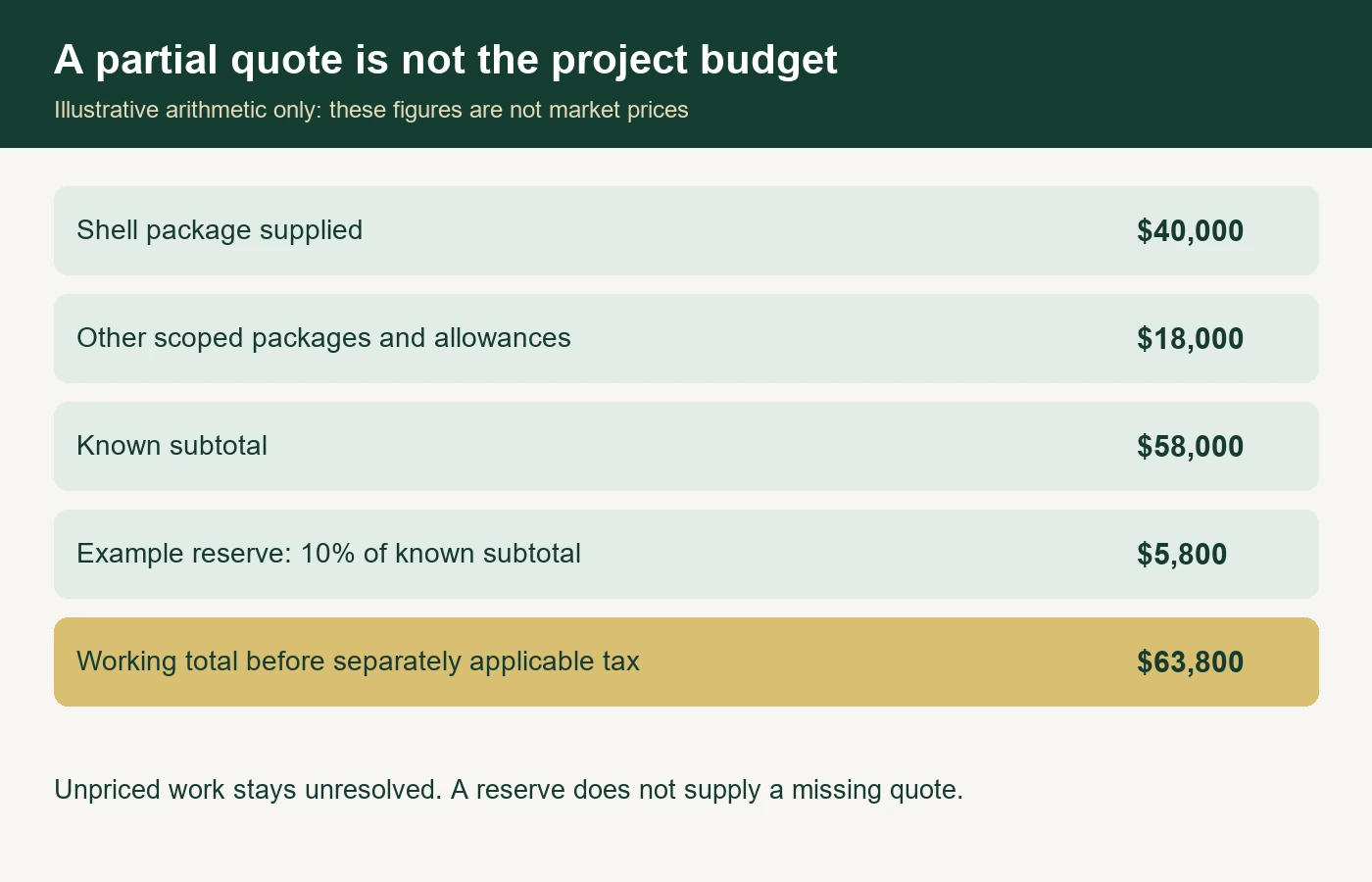
A reserve can make uncertainty visible in cash planning, but no universal percentage makes an incomplete scope complete. If a known retaining-wall requirement has not been priced, list it as a missing package. Don’t rely on a general reserve to imply it is covered.
Avoid paying for the same scope twice in your estimate
One installer may quote the shell, reinforcement and finish together. Another may divide them into separate lines. Either can be readable if the boundaries are explicit. Problems arise when a package price and its included material rows both remain active in your own calculation.
Use one route for each included cost: the package quote or the separate schedule. Keep a cross-reference where several headings are covered by one contract. Don’t invent a cost split that makes the numbers look precise if the supplier has not provided one.
The planner’s contractor-markup field is also a deliberate choice. A homeowner entering a contractor’s selling price should not automatically add a second contractor markup. Record whether each figure is a supplier cost, an installed selling price or a provisional allowance, and use one consistent tax basis.
Separate quantities from design decisions
A rectangular water volume does not determine shell thickness or steel requirements. The planner can calculate quantities from entered specifications, but a quantity result isn’t evidence that the specification is suitable. Leave unresolved design fields unresolved until the project’s qualified designer or supplier provides the information.
Likewise, internal finish area does not account automatically for every step, bench, curve, opening or special detail. For irregular or sloping shells, use supplied schedules where the simple model doesn’t represent the geometry. Keep the drawing revision with the quantity so an older takeoff doesn’t survive a design change unnoticed.
The concrete calculator can help check a separately specified volume and ordering allowance. It does not choose the pool’s structural dimensions. The paving and patio calculator can organize measured surround quantities once their scope and product choices are known.
Before combining those orders, use the concrete ordering example to distinguish volume from whole-bag purchases, and the patio materials guide to distinguish surface units from complete packs.
Put access and site conditions in the quote discussion
Ask how equipment reaches the work area, where excavated material goes and who repairs access surfaces afterward. Record assumptions about rock, groundwater and disposal rather than assuming a standard excavation price covers every condition.
Before digging in the US, follow 811’s state-specific locating process and confirm the required responses before work begins. Discuss any private-service locating needed for the site. The project team should also establish temporary works and groundwater responsibilities instead of leaving those decisions until excavation is underway.
Include applicable approvals and safety arrangements in the early scope. The CPSC’s home-pool barrier guidance is a useful reference for the discussion, alongside local requirements. A budget checkbox does not confirm compliance, and a finished pool illustration does not establish a suitable barrier design.
Compare proposals on one page
Create columns for each bidder and rows for the work packages above. Copy their inclusions, exclusions, allowances and document references accurately. Use “not stated” when a proposal is silent, then ask for clarification. Don’t turn silence into “included.”
Check completion as carefully as construction. Who commissions the equipment, supplies operating information, arranges remaining inspections and restores the garden? Record what counts as complete and which costs could change before work starts. Keep quote dates and validity periods beside the totals.
Once you have comparable scopes, review optional features separately from required work. Removing a decorative feature is a different decision from leaving an essential service unpriced. Save dated versions of the budget so you can see what changed and why.
For a smaller freestanding option, the above-ground pool site preparation checklist covers a different installation route. Compare the full usable project for each option, including access and surroundings.
Organize your pool quotes and unresolved work →
Featured artwork is a concept illustration, not a completed Handyman Hub project. All dollar figures in the example are hypothetical and are not market-price guidance.


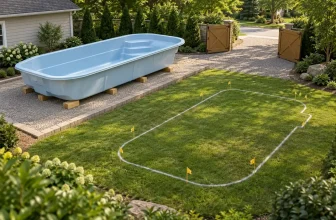
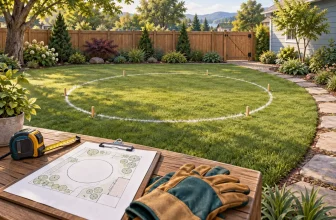
[…] Inground Pool Budget […]
[…] Inground Pool Budget […]